



How to Attribute Influencer Campaigns in Mobile Marketing


Your MMP says the influencer campaign delivered a $14 CPI. Your organic installs spiked 3× during the flight. Both numbers are real — and neither tells the full story. Here's how to build an attribution stack that does.
Executive Summary
- Click-based attribution structurally undervalues influencer campaigns. The combination of second-screen viewing, in-app browsers breaking deep links, and delayed installs means that tracked links and promo codes capture roughly 30–40% of the installs an influencer campaign actually generates.
- There is no single attribution method that solves the problem. The practical answer is a layered stack: tracked links for granular per-creator optimization, promo codes for clickless attribution, organic uplift modeling for the untracked majority, and competitive intelligence tools like Apptica to separate your signal from market noise.
- Privacy infrastructure has made this harder — and more important. With ATT opt-in rates at ~35% globally and SKAN providing only aggregated, delayed postbacks, the gap between what your MMP can see and what's actually happening has widened. Influencer campaigns, which operate largely outside the click→install→postback chain, fall into that gap.
- Incrementality testing is the closest thing to ground truth. Geo-lift experiments and baseline modeling let you measure the causal impact of influencer spend, not just what your tracking happened to capture. Teams that build this into their measurement rhythm consistently find that influencer ROI is 2–4× higher than what last-click attribution reports.
Why Standard Attribution Fails for Influencer Campaigns
Before diving into what works, it's worth being precise about what doesn't — and why. Most UA teams run influencer campaigns through the same attribution infrastructure they use for paid media: generate a tracking link in your MMP (AppsFlyer, Adjust, Singular, Branch), hand it to the creator, and measure installs against that link. The problem isn't the tool. It's the assumption behind it: that the user journey from ad exposure to install involves a click.
For paid social and ad network campaigns, that assumption is roughly correct. A user sees an ad, taps it, gets redirected to the App Store, installs. The MMP fires, the install is attributed, the CPI is calculated. Clean.
For influencer campaigns, that assumption fails at almost every step.
The viewer isn't on mobile. A significant and growing share of YouTube gaming content is consumed on desktops, laptops, and smart TVs. Zorka.Agency's research notes an ongoing shift of viewers to larger screens — which is precisely why QR codes became an industry standard for YouTube integrations. But a QR code scanned from a TV screen is a high-friction conversion path. Most viewers don't do it. They search for the game later, directly in the App Store, and the install appears organic.
The click path is broken. When a viewer does tap a link on mobile, the link opens inside the platform's in-app (YouTube, TikTok, Instagram) browser, each running its own WebView with its own quirks. AppsFlyer documented how a single WebView update on X broke deep links entirely on iOS, creating dead-end funnels that silently killed conversions. As Open Door Digital's deep-linking guide explains, social in-app browsers generally do not support universal links directly, requiring intermediate landing pages and smart-banner workarounds that add friction and leak users at every step.
The conversion is delayed. Influencer content builds intent over time; it doesn't convert on the spot like a performance ad. Airbridge's analysis puts it plainly: a user discovers a creator's content, follows along for days or weeks, and installs well outside standard attribution windows (typically 7–28 days for click-through). By the time they act, the attribution trail has gone cold.
The net effect: your MMP sees a fraction of the installs, reports a CPI that looks expensive relative to paid channels, and the influencer budget gets cut. Meanwhile, the real ROI — the revenue from the installs your MMP classified as "organic" — goes uncredited.
The Attribution Toolkit: What Actually Captures Value
No single method solves influencer attribution. Each tool captures a different slice of the user journey, and the practical approach is to deploy all of them simultaneously, knowing what each one can and cannot see.
Tracked Links (Deep Links via MMP)
What they capture: The click-to-install path for users who tap a creator's link on mobile and complete the install in a single session. This is your most granular signal: you get per-creator, per-campaign attribution with full downstream event tracking (retention, revenue, LTV).
What they miss: Everything that doesn't start with a click. Users watching on desktop or TV. Users who see the link but search the App Store directly. Users whose click is swallowed by an in-app browser. Airbridge estimates that tracked links consistently underperform on platforms that restrict or strip URLs — Instagram doesn't allow clickable links in feed posts, TikTok limits link placement to bio.
Best practice: Generate unique tracking links per creator, not per campaign. Use deep links through your MMP (not raw App Store URLs) so that attribution is preserved through the redirect. Adjust recommends assigning unique deep links or QR codes to each influencer to attribute downloads and in-app events at the creator level. Configure QR codes with the same tracking parameters — on YouTube integrations especially, the QR code is often the primary conversion mechanism for second-screen viewers.
Promo Codes
What they capture: Clickless attribution. A user who hears the creator's code, searches the App Store directly, installs, and enters the code during onboarding or at a redemption screen. No click required — which makes promo codes the only deterministic attribution method that works across the second-screen gap.
What they miss: The majority of users who don't bother entering the code. As TUNE notes, promo codes are platform-agnostic and work across channels, but they require the user to remember and actively enter the code — a minority of total influencer-driven conversions. There's also the leakage problem: codes spread to coupon aggregator sites, attributing conversions to the wrong source.
Best practice: Use promo codes as a complement to tracked links, not a replacement. Configure codes to work only for new users and limit them to single-use where possible. Design the in-game redemption UX to make entering a code feel rewarding (unlockable content, bonus currency) rather than transactional. The code serves double duty: attribution signal for you, value exchange for the user.
Organic Uplift Modeling
What it captures: The untracked majority. This is the portion of installs that your links and codes can't see — users who watched the creator's content on a different device, searched for the game later, or installed outside the attribution window. In a well-executed YouTube campaign, organic uplift typically accounts for 40–60% of the total incremental installs.
What it misses: Granularity. Organic uplift is measured at the campaign or flight level, not at the per-creator level. You can see that the campaign worked; you can't always see which creators drove the uplift.
Best practice: Establish a daily organic install baseline for your target geos at least 60 days before the campaign flight. During and after the campaign, measure the deviation from baseline using time-series analysis, controlling for day-of-week effects, seasonality, and concurrent marketing activity. Upptic's baseline modeling approach is a solid reference: track the interaction between paid influencer spend and organic traffic directly, and the delta is your organic uplift.
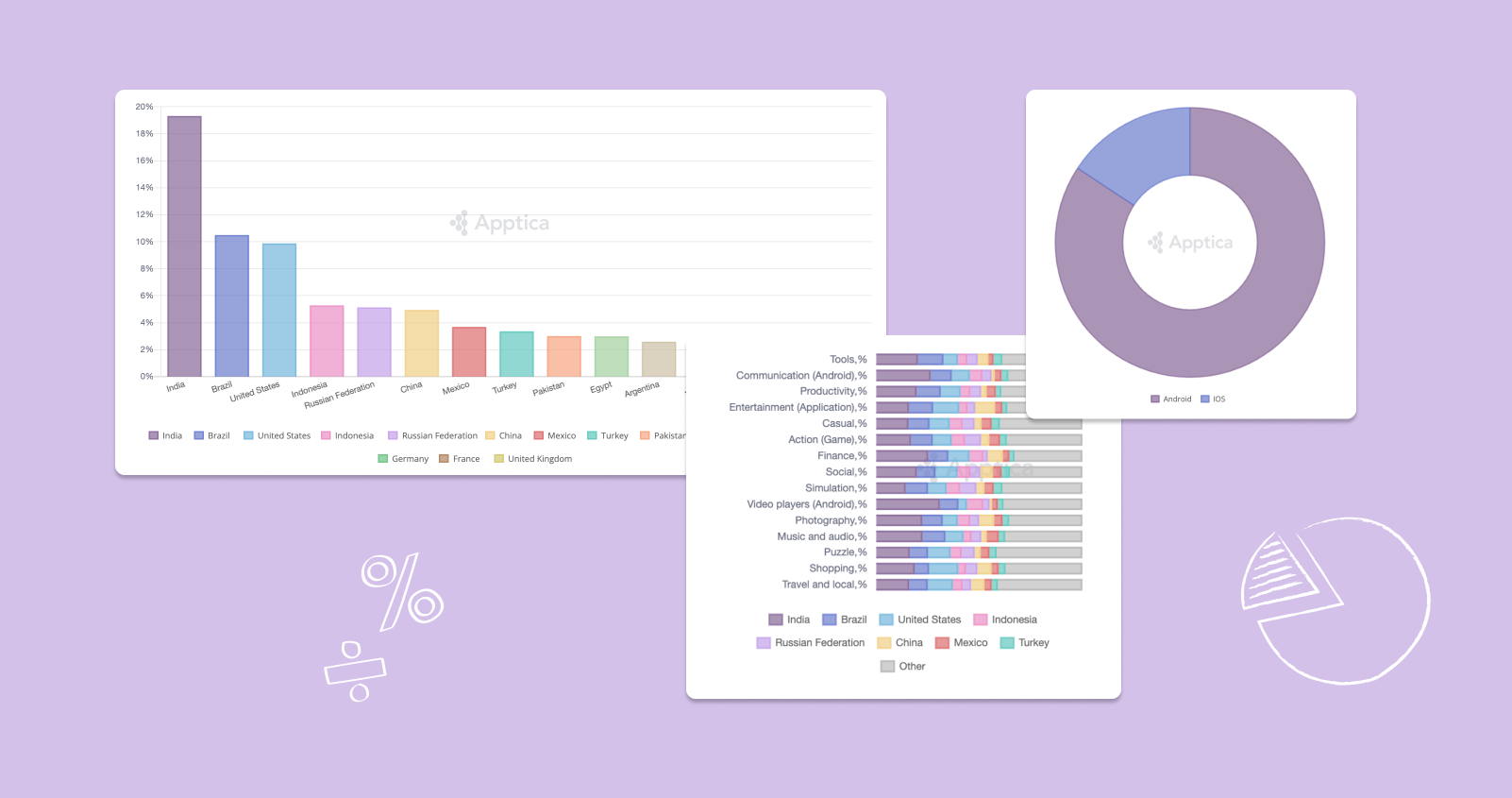
Critically, you need to separate your campaign's organic lift from market-wide trends. If your genre is having a good week — a competitor launched a big campaign that's raising category visibility or a seasonal event is driving searches — you'll overcount your uplift. This is where Apptica's Market Intelligence becomes operationally important: monitoring category-level download trends and competitor campaign activity during your flight window lets you isolate your signal from the noise.
Branded Search and ASO Spillover
What it captures: The downstream effect of influencer campaigns on App Store search behavior. A well-executed creator integration doesn't just drive installs — it drives searches. Users who saw the content search for your game name, your genre, or even the creator's name plus "game" in the App Store. If your ASO is properly configured, those searches convert to installs that your MMP attributes to organic or branded search — not to the influencer campaign that generated the query.
Best practice: Monitor branded keyword rankings, search volume, and search-driven install volume during the campaign window using App Store Connect and Google Play Console. Cross-reference with Apptica's Store Intelligence to track how your keyword positions and download trends shift relative to baseline. A spike in branded search installs that correlates with your influencer flight timing is strong evidence of campaign-driven value.

Building the Measurement Stack: A Practical Framework
Knowing the tools is one thing. Assembling them into a coherent measurement practice is another. Here's a step-by-step framework that works for mobile gaming UA teams running influencer campaigns at scale.
Step 1: Instrument Before You Spend
The single most common attribution failure is launching a creator campaign without the measurement infrastructure in place. You cannot retroactively construct a counterfactual baseline. Before the first video goes live, ensure you have: a 60–90 day organic install baseline by geo, your MMP configured with unique per-creator links and QR codes, promo codes built into the game's onboarding flow, and your market intelligence tooling (Apptica or equivalent) tracking your category and direct competitors.
Step 2: Run Discrete Campaign Flights
Influencer attribution is dramatically easier when campaigns have clear start and end dates. A 10-day flight with 15 creators publishing within a defined window produces a clean organic uplift signal: you can see the spike, measure the deviation from baseline, and observe the decay. Continuous low-level creator activity, by contrast, makes it nearly impossible to isolate the influencer effect from other marketing.
Align flights with your live-ops calendar. Creator content that references a new in-game event, character, or seasonal moment gives the audience a specific reason to install now — and it gives you a cleaner attribution window because the event has a known start and end date.
Step 3: Measure in Three Layers
This is where the framework comes together. For each campaign flight, you're measuring three distinct signals:
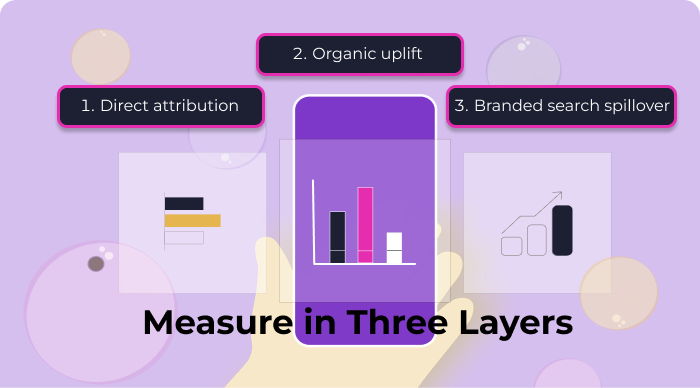
- Layer 1: Direct attribution (links + codes). Sum the installs tracked through your MMP links and the promo code redemptions. This is your optimization signal: per-creator CPI, Day-7 retention, Day-30 LTV. Use this data to build creator-level unit economics and decide which creators to re-book.
- Layer 2: Organic uplift. Compare observed organic installs during and after the flight to your pre-campaign baseline. The delta — after controlling for market-wide trends via Apptica category data — is your organic lift estimate. Add this to Layer 1 to get total incremental installs.
- Layer 3: Branded search spillover. Monitor branded search install volume in App Store Connect and Google Play Console during the flight. A correlated spike is additional evidence of campaign-generated value. In some campaigns, this can be 10–20% of total incremental installs on top of what Layers 1 and 2 capture.
The blended CPI across all three layers will typically be 2–4× lower than the CPI your MMP reports from tracked links alone.
Step 4: Validate with Incrementality Testing
If your budget allows, run periodic incrementality tests to validate your organic uplift model. The two most practical approaches for influencer campaigns are:
Geo-lift testing. Run your influencer campaign targeting specific geos (e.g., US and UK) while holding out comparable geos (e.g., Canada and Australia) as a control. Compare the install lift between test and control geos. Adjust's incrementality framework and INCRMNTAL's always-on measurement platform both support this approach. Geo-lift works well for influencer campaigns because it doesn't require user-level tracking — you're comparing aggregate install volumes between regions.
Pre/post baseline comparison. A simpler version: pause influencer spend entirely for 4–6 weeks, measure the resulting organic install volume, then restart and measure the delta. This is less rigorous than a randomized geo-lift test, but it's operationally easier and directionally accurate enough to validate your uplift model. Deducive's measurement guide recommends combining incrementality with media mix modeling for long-term strategic planning.
The Privacy Layer: Attribution in a Post-ATT World
Everything described above becomes harder — and more important — in the current privacy environment.
On iOS, ATT opt-in rates sit around 35% globally as of mid-2025, and the trend is downward. For the 65% of users who don't opt in, your MMP has no IDFA and falls back on SKAdNetwork — which provides aggregated, delayed postbacks with no user-level granularity. SKAN 4.0 improved the situation marginally with three measurement windows and crowd anonymity tiers, and SKAN 5.0 (expected in 2026) promises faster postbacks and built-in incrementality testing. But fundamentally, SKAN was built for performance advertising — ads served inside apps that can fire SKAdNetwork API calls. Influencer campaigns, where the "ad" is a YouTube video or TikTok post, exist entirely outside the SKAN attribution chain.
This means that for influencer campaigns specifically, the privacy-era measurement gap is even wider than it is for paid UA. The tracked-link signal that your MMP captures has degraded because of ATT. The SKAN fallback doesn't apply because the content doesn't originate from an ad network. And the user behavior that influencer campaigns generate — watching content on one device, installing on another, often days later — is precisely the kind of cross-device, delayed-conversion journey that privacy frameworks make hardest to track.
The counterintuitive upside: this is exactly why the measurement stack described above matters more, not less. Organic uplift modeling, branded search analysis, and incrementality testing are all privacy-safe by design. They work with aggregate data, not user-level identifiers. They don't require IDFA, cookies, or SKAN postbacks. In a world where deterministic attribution keeps shrinking, these probabilistic and causal methods become the primary source of truth for influencer ROI.
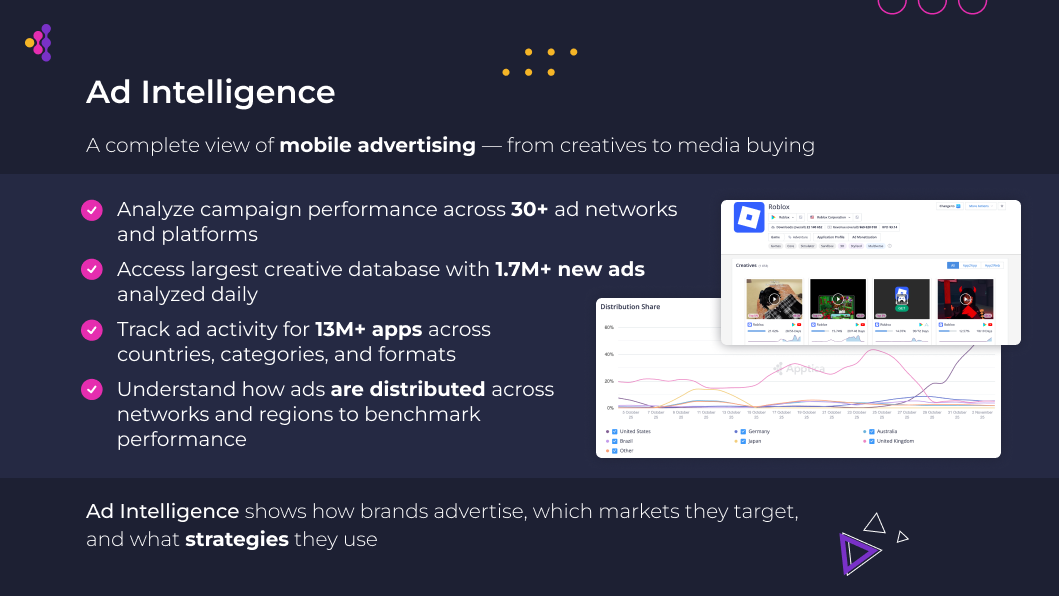
And here's where competitive intelligence becomes a quiet advantage. While your own attribution data gets noisier, your ability to observe competitors' strategies remains intact. Apptica's Ad Intelligence lets you monitor which competitors are running creator campaigns, what creative formats they're using, and how their download trends respond — all from public data that no privacy framework restricts. When you can see that a competitor's organic installs spiked during a known influencer flight, you have external validation that the channel works, even when your own internal attribution is incomplete.
Common Mistakes (and How to Avoid Them)
Evaluating influencer campaigns on tracked-link CPI alone. This is the most expensive mistake in mobile UA. If your MMP says the campaign delivered a $14 CPI and your Meta campaigns deliver $3, the natural conclusion is to shift budget to Meta. But if you account for organic uplift and branded search, the influencer campaign's blended CPI might be $4–5 — with better retention and LTV. Always report blended CPI (all three layers) alongside tracked CPI.
Using campaign-level tracking instead of creator-level tracking. If all 15 creators in a flight share the same tracking link, you can see that the campaign worked but you can't see which creators drove the value. Generate unique links and unique promo codes per creator. This is the foundation of creator-level unit economics — and it's what lets you build a bench of proven creators you can re-activate for future flights.
Neglecting ASO alignment. MobileAction's analysis highlights a common failure: after watching an influencer campaign, many players search for the game name or related terms in the App Store. If your app store listing doesn't match what the creator showed — different screenshots, mismatched value proposition — you lose the install even after generating the intent. Update your App Store screenshots and preview video to reflect the gameplay features emphasized in the influencer content. Track how competitors handle this with Apptica's Store Intelligence, which captures screenshot and description changes over time.
Running always-on influencer spend without discrete flights. Continuous creator activity makes it nearly impossible to isolate organic lift. Structure your influencer calendar around discrete 1–2 week flights with clear start and end dates, ideally aligned with in-game events. Measure each flight independently. The compounding awareness effect of multiple flights is real, but you need per-flight measurement to optimize.
Ignoring the in-app browser problem. If you're handing creators raw App Store URLs, you're losing installs to broken WebView redirects on every platform. Use MMP-generated deep links that handle in-app browser detection and routing. Test every link on real devices inside the actual platform (YouTube app, TikTok app, Instagram app) before the content goes live. As AppsFlyer's documentation shows, a single platform update can break your entire funnel without warning.
The Bottom Line
Influencer attribution in mobile marketing is not a solved problem — and it probably won't be, because the channel fundamentally operates outside the click-based infrastructure that the rest of UA was built on. The user journey from "I watched a creator play this game" to "I installed it" crosses devices, platforms, and days. No single tracking method captures the whole thing.
The teams that get influencer attribution right are the ones that stop trying to force the channel into a click-based measurement model and instead build a layered stack: tracked links for per-creator optimization, promo codes for clickless conversions, organic uplift modeling for the untracked majority, incrementality testing for causal validation, and competitive intelligence via Apptica to separate signal from noise.
The payoff isn't just more accurate measurement — it's better budget allocation. When you can see the full picture, influencer marketing stops looking like an expensive awareness play and starts looking like what it actually is: a high-LTV acquisition channel that your competitors are probably under-investing in for the same measurement reasons you used to.
Fix the measurement first. The ROI was always there.